Saturday, March 16, 2013

Birmingham 1963: How a Photograph Rallied Civil Rights Support


Birmingham 1963: How a Photograph Rallied Civil Rights Support   By Shelly Tougas

                                          Published in 2011    64 Pages


I am always on the lookout for books that feature examples of young people who stood up, spoke out and made history. I feel that this is something that we can not emphasize enough. Whenever I present a book like this, I always ask the students if they need to be grown ups in order to speak up and stand up for what is right in order make a change. I also mention to students how history is made. It is often made not by famous people, but people like you and me - people whom you never hear about in the typical accounts.

This book provides an excellent example of how young people (a lot of whom were elementary school children) made history. Birmingham, Alabama of 1963 provided a lot of iconic examples of the repressive measures that were undertaken to squelch demands for civil rights. This was a city that had Bull Connor, no qualms about using fire hoses and police dogs on young people, and a very active culture of bombing. In the face of these obstacles, many adults were intimidated.

In this case, it was the youth who led the way. When their teachers were reluctant to march, the students ditched school to stand up and speak out. The images of these young people braving fire hoses, police dogs, and going to jail mobilized the community and garnered support for the civil rights movement across the country. The example that the students set catalyzed the community, and helped mobilize people on a wider scale.
.
This book is filled with the evocative and iconic photos of Charles Moore. They resonate very well with the students, and they are fertile ground for conducting writers' workshops or interactive activities.

I used six photos from this book for a writers' workshop of 5th graders. I had the students write thoughts from the perspective of individual people in the photos. The students created some evocative work. I feel that the vividness of the photos helped the students elaborate their writing in terms of giving it more emotional impact.

Very highly recommended.

See "Marching for Freedom" for an excellent treatment of how the youth of Selma rose to the occasion. The same goes for "We've Got a Job" on the role of the youth of Birmingham.

If you put all three books together, you can begin to grasp just how prominent and pivotal youth activism was in Alabama at that time.

Kids Inventing! A Handbook for Young Inventors


                   Kids Inventing! A Handbook for Young Inventors   By Susan Casey
                                                 Published in 2005  134 Pages


Highly, highly recommended!

Typically invention books for children tend to emphasize the inspirational at the expense of the practical. This book is a notable exception in its detailed, step by step approach rendered in intelligible terms for upper elementary students.

Students are guided through the creative process. The author covers brainstorming, how to make a model, and how to come up with a catchy name for your invention. Through each step of the process, the book provides examples of young inventors, their inventions, and how they managed the hurdles of turning their ideas into reality.

However, creating a new invention is just a step in the process. The author also walks the readers through the ins and outs of applying for patents and trademarks, finding a company to manufacture your invention, selling and marketing your invention. Each of these steps is illustrated with examples of young inventors' experiences in these matters.

The appendix offers suggestions for further reading, a list of useful websites, and a roundup of invention competitions, programs and camps in the US.

Since this book was published in 2005, I would suggest a conducting a search for additional information to augment the appendix.

Saturday, March 9, 2013

The Wolf Girls: An Unsolved Mystery From History


                             The Wolf Girls: An Unsolved Mystery From History  
         By Jane Yolen & Heidi Elisabat Yolen Stemple    Published in 2001   32 Pages


Out of print, but by all means secure a copy. They can typically be found at reasonable prices used.

This book is one of a series of four. The others treat the topics of the Salem Witch Trials, the lost colony of Roanoke, and the Mary Celeste. This particular book stands head and shoulders above the rest in the series, yet all share the same format.

These books are designed to encourage and exercise the critical thinking skills of kids. Our narrator is a young girl who likes to investigate historical mysteries. The book is formatted like an investigation. There is the text with illustrations, and then there are the girl's research notes superimposed over parts of the pages. Additionally, there are mock post it notes that detail the definitions that the girl had to "look up". Then reader is invited to put together the text and notes in order to form a theory about what really happened.

I think what separates this book from the others in the series is the amount of contradictory information that the reader must consider. I feel that this book demands a higher level of thinking than the others in
the series.

The mystery that this book treats is from India in 1920. A missionary took in two children at his orphanage. Allegedly they were raised by wolves. The missionary published an account, put one of the girls on display, and collected donations for the orphanage. The narrator's research notes inform the reader of conflicting accounts, background information, scientific knowledge, and quotes from the missionary's journal. With all of this information, the readers are amply equipped to form and support their own conclusions.

Four theories are considered at the end of the book, and readers are encouraged to form alternate interpretations. Each of the four theories is presented with a series of questions that the reader must answer from the evidence in order to support or critique that particular conclusion. This format also illustrates how one would go about supporting an alternative explanation.

In terms of using this book, one possibility is to make index cards that each contain a bit of information or evidence to consider. Then you can use four pieces of chart paper to represent each of the theories and have the students paste the cards under the theory that they think the evidence supports. Then you can have the students discuss what possibilities they believe and how the available evidence supports it.  

Ironically, there is a more recent (and far inferior) picture book on the topic of the wolf girls. It is titled "When I Met the Wolf Girls". This book is a actually a step backwards because its author did not do any critical thinking at all in scrutinizing the accounts of this case, and she took the missionary's claims at face value. It would be a good exercise to have students use what they have learned form the Yolen work to evaluate this later book.


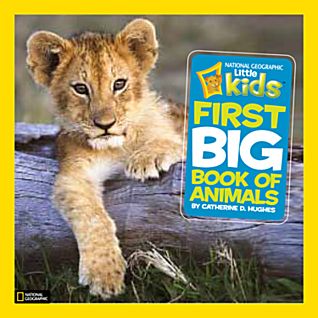
Little Kids First Big Book of Animals


Little Kid’s First Big Book of Animals     By Catherine Hughes

Published by National Geographic in 2010    128 Pages


Animal books are a regular request from both teachers and students. Though there are many great books that treat individual animals, I also favor stocking single volume animal encyclopedias.

A single volume animal encyclopedia is a good match for the eclectic curiosity that often informs students’ interest. Additionally, since single volume encyclopedias cover a range of subjects, their organizational structure can identify relationships and connections between the animals.

There are several animal encyclopedias that I rate highly; however, they are typically written for upper elementary students and up. There is a real need for this type of book for younger grades.

This particular book is not an encyclopedia per se, but it has some of the features of one, and it is a good scaffold for preparing kids to use reference materials.

The layout is very attractive and full of great photos, and the book is organized by habitat. Grassland, ocean, desert, forest, and polar regions are covered. Text is interspersed with the photos in a variety of formats, which separates the information into manageable chunks. Additionally, it is written at a 1st to 2nd grade level.

National Geographic has already published several books in this series, I shall keep an eye out for them. 

Friday, March 8, 2013

San Francisco: Then and Now


San Francisco: Then and Now   By Bill Yenne    Originally Published in 1998   144 Pages


This is a valuable book for any collection. It is always fascinating to see how the city has changed over time. The vintage photos span from 1850 to 1954, and they are accompanied by captions that detail their prominent features. The comparison photos' captions detail the changes that have taken place since the time that the originals were shot.

This book is divided into sections that reflect various parts of the city. However, there is a neighborhood bias at work here. For example, Japantown, the Fillmore, the Bayview, Hunters Point, and the Excelsior get no mention at all. Additionally there are other neighborhoods that do not appear in the book.

Though this book is fantastic, by no means should it be considered or treated as a comprehensive work.

I would encourage the use of supplemental sources to fill in the gaps that exist.
  

A Warmer World: Climate Change & Wildlife


A Warmer World: From Polar Bears to Butterfies, How Climate Change Affects Wildlife

By Caroline Arnold         Illustrated by Jamie Hogan    Published in 2012    32 Pages


This may be the most accessible book on global warming that I have seen. The layout is attractive, concise, and full of information.

The book provides information on how climate change impacts the earth. From there, it details specific examples of the adverse effects that global warming has already had on wildlife. The treatment is well done and presented with lots of engaging examples. There is also a glossary and reference list included.


Sina & Tinilau


           Sina & Tinilau  By Vilsoni Hereniko,    Illustrated by Jasper Schreurs  

                       Published in 1997            24 gorgeous oversized pages


Wow! What an amazing book. Shamefully, it is only available in paperback. There has never been a hardcover edition.

Samoan books are a rarity, and yet they are sorely needed in our schools. We have Samoan kids who never get to see themselves in the books that are available in the library. Additionally, it is important for all of our students to be familiar with each others' cultures.

The story recounts an origin tale that is common to the various Pacific Island cultures, and it is presented in a stunning manner. The art is simply beautiful, and each page has a border that details the flora, sea life, tools, implements, and housing styles that appear in the illustrations. There is quite a bit of information contained in the borders, and it encourages readers to study the drawings very carefully.

Additionally, there are some other possibilities for this book. This story is similar to "The Princess and the Frog", and it would make for a fantastic compare and contrast study. You can also ask students how is it possible for cultures to come up with similar stories and themes independently. What does this tell you about the commonalities we all share?

Another possibility would be to use the story to investigate and appreciate the superlative seafaring skills of the Pacific Islanders. The story touches upon this with its reference to the various islands from which visitors hailed. The artwork and the border information give more information in this regard. You see examples of stick maps of ocean currents, examples of various types of canoes, and even an illustration of how you can easily make radical changes in the direction of a symmetrically hulled canoe by changing the sail's position - in short, a canoe that has a reverse function!

As we are aware, paperbacks can be quite perishable, and the large size of this one makes it especially susceptible to damage. Nonetheless, I think it is well worth getting. You could either use it as a non circulating read aloud, circulate it with caution, or buy two copies to deconstruct and display the whole book like a Burma Shave sign sequence.